
Board for Humanitarian Emergency Coordination and Human Protection (CETU)
The Board for Humanitarian Emergency Coordination and Human Protection (CETU) is the CNU body responsible for strategic planning, institutional coordination and supervision of the Confederation’s humanitarian preparedness and emergency-response activities.
Its purpose is to strengthen the ability of the Confederation, its member organizations and its territorial structures to contribute responsibly to humanitarian responses involving natural disasters, health emergencies, serious social crises and other situations affecting human life, dignity or essential needs.
The CETU operates within the institutional framework established by the CNU Statute and in accordance with applicable national and international law.
It does not replace public authorities, civil-protection systems, emergency services or other institutions legally responsible for managing emergencies.
Mission
The CETU works to ensure that CNU humanitarian activities in emergency contexts are:
- planned in advance;
- properly coordinated;
- proportionate to identified humanitarian needs;
- consistent with the competences of the authorities concerned;
- documented and accountable;
- carried out according to clear operational responsibilities;
- based on humanitarian principles and the protection of human dignity.
Its role is principally one of planning, coordination, supervision and institutional support.
Field activities are carried out through the competent CNU operational structures, confederated organizations or authorized partner organizations, according to their respective mandates, qualifications and responsibilities.
Humanitarian Principles
The activities coordinated by the CETU are guided by the principles of:
- humanity;
- impartiality;
- neutrality;
- independence;
- non-discrimination;
- accountability;
- respect for human dignity;
- respect for applicable law.
Humanitarian assistance is directed according to assessed needs and without political, ethnic, religious or other discriminatory considerations.
Main Functions

The CETU is responsible, within the CNU institutional framework, for:
Emergency Preparedness
Developing contingency plans, response frameworks, internal procedures and coordination mechanisms intended to improve the Confederation’s preparedness for humanitarian crises.
Strategic Coordination
Coordinating the relevant CNU bodies and structures involved in a humanitarian response and facilitating communication with competent authorities, public institutions and partner organizations.
Humanitarian Needs Assessment
Supporting the collection and analysis of reliable information necessary to understand humanitarian needs and determine what forms of assistance may appropriately be offered.
Such assessments do not constitute declarations of emergency or determinations reserved to public authorities.
Support to Humanitarian Missions
Providing organizational, documentary and logistical planning support for missions authorized within the CNU framework.
Operational deployment remains subject to applicable law, security conditions, the competences of local authorities and the mandate of the operational structure concerned.
Human Protection
Promoting measures aimed at protecting life, dignity and fundamental rights through humanitarian assistance, prevention, monitoring, referral, documentation and cooperation with competent institutions.
The concept of human protection within the CETU does not imply police, military, coercive or law-enforcement powers.
Cooperation and Partnerships
Developing cooperation with public institutions, humanitarian organizations, civil-protection structures, local communities, NGOs and other qualified partners where such cooperation can strengthen emergency preparedness and humanitarian response.
Any cooperation takes place in accordance with applicable law and the respective mandates of the parties involved.
Relationship with the CNU DisasterTeam
The CETU and the CNU Humanitarian Intervention Corps – DisasterTeam perform complementary but distinct functions.
The CETU provides strategic planning, coordination, supervision and institutional support.
The DisasterTeam constitutes the specialized operational structure through which CNU field activities may be carried out when duly activated and where the necessary legal, professional and security conditions are satisfied.
The CETU therefore does not replace the operational chain of command of the DisasterTeam or of any external emergency service participating in a response.
Relationship with Other CNU Bodies
Depending on the nature of the emergency, the CETU may work in coordination with:
- the CNU Human Rights structures;
- the Human Health Board;
- the Environmental and Biodiversity structures;
- the Special Humanitarian Investigation structures, where appropriate;
- territorial CNU Missions;
- the General Secretariat;
- other competent CNU bodies.
Each body retains the competences assigned to it by the Statute and the relevant regulations.
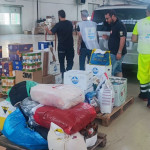
Emergency Logistics
The CETU may maintain a dedicated emergency logistics function to support the planning and organization of humanitarian missions.
Its activities may include:
- assessment of logistical requirements;
- inventory and availability planning;
- coordination of humanitarian supplies;
- transport and mobility planning;
- identification of storage and distribution requirements;
- logistical liaison with operational structures and partner organizations.
The logistics function does not independently deploy personnel, vehicles or equipment.
The actual movement, use and deployment of operational resources takes place only through the competent operational structure and in accordance with applicable authorizations, safety procedures and local regulations.
Cooperation with Public Authorities
The CNU recognizes that emergency management, civil protection, public safety and other public functions remain subject to the laws and competent authorities of each State.
Accordingly, CNU activities are intended to be complementary and supportive, not substitutive.
When operating in an affected territory, the CETU seeks appropriate coordination with the competent authorities and with organizations officially engaged in the response.
The presence or activity of CNU personnel does not confer public authority, emergency powers or any competence reserved by law to national or local institutions.
Humanitarian Volunteers and Professionals
CNU humanitarian activities may involve volunteers, qualified professionals, confederated organizations and Human Rights Defenders.
Participation in field activities is subject to the requirements applicable to the specific mission, including professional qualifications, training, insurance, safety procedures, authorizations and the operational chain of command.
Being a member of the CNU or an accredited Human Rights Defender does not, by itself, authorize participation in emergency-response operations.
Accountability and Documentation
Activities coordinated by the CETU are documented in order to ensure:
- traceability of decisions;
- clarity of responsibilities;
- protection of beneficiaries and personnel;
- accountability for resources;
- evaluation of results;
- continuous improvement of procedures.
Following significant humanitarian missions, the competent structures prepare appropriate operational and institutional reports in accordance with CNU internal procedures.
Our Approach
The CNU believes that an effective humanitarian response requires cooperation among public authorities, humanitarian organizations, qualified professionals and affected communities.
The role of the CETU is to help connect these capacities within a responsible and clearly defined framework.
Its objective is not to create a parallel emergency-management system, but to ensure that the resources and expertise available within the Confederation can contribute effectively, lawfully and safely when humanitarian needs arise.