
Humanitarian Assistance and Protection
Protecting Human Dignity Through Cooperation and Action
The Confederation of Humanitarian Nations (CNU) works to support individuals and communities whose fundamental rights, safety or dignity are threatened by serious humanitarian circumstances.
Human rights violations may take many forms, including violence, exploitation, trafficking in persons, disappearance, discrimination, abuse, threats to personal security, deprivation of fundamental rights and situations in which vulnerable people require urgent humanitarian protection.
The CNU responds through a coordinated system combining human-rights documentation, legal support, institutional dialogue, humanitarian intervention and cooperation with competent national and international authorities.
The objective is not to replace Governments, courts, law-enforcement authorities or humanitarian institutions.
The objective is to work with them, providing the capabilities, information, professional expertise and international network available within the Confederation.
Human Rights Assistance
Individuals, communities and organizations may bring situations of concern to the attention of the competent CNU structures.
Depending on the circumstances, the CNU may:
- receive and document reports concerning alleged human-rights violations;
- conduct preliminary humanitarian and documentary assessment;
- collect supporting documentation and information;
- assist in identifying competent authorities or international mechanisms;
- provide institutional and humanitarian support;
- facilitate communication with competent public authorities;
- support access to qualified legal professionals;
- transmit documented reports or information to appropriate institutions;
- activate competent CNU bodies where the circumstances require it.
The existence of a report does not automatically establish that a violation has occurred.
Information is assessed according to available evidence, applicable procedures and the principle of impartiality.
Legal Support and Protection
Through the CNU Prosecutor’s Department and its Human Rights Legal Support functions, the Confederation may provide documentary, procedural and legal support in matters falling within its humanitarian mandate.
Activities may include:
- analysis of documentation;
- preparation of institutional correspondence;
- preparation of humanitarian or legal dossiers;
- assistance in identifying applicable procedures;
- support in communicating with authorities and institutions;
- coordination with qualified external legal professionals;
- referral to competent national, regional or international mechanisms.
Where national law requires representation by a licensed lawyer or other regulated professional, legal representation is entrusted to professionals authorized in the relevant jurisdiction.
CNU legal structures do not replace national courts or professional legal services reserved by law.
Human Rights Defenders
CNU Human Rights Defenders (HRDs) contribute to the peaceful protection and promotion of fundamental rights.
Their activities may include:
- observation;
- documentation;
- reporting;
- humanitarian assistance;
- awareness and education;
- institutional communication;
- support to affected individuals and communities;
- cooperation with CNU Missions and competent authorities.
HRDs operate through peaceful and non-violent methods.
Their CNU accreditation does not confer police powers, judicial authority, diplomatic immunity or autonomous enforcement powers.
Their role is based on humanitarian action, credibility, responsible documentation and cooperation.
Humanitarian Investigation
In serious cases, the CNU may activate specialized investigative capacities within its institutional framework.
The Special Humanitarian Investigation Corps (CIUS) may contribute to humanitarian investigations involving serious violations of fundamental rights, threats to vulnerable communities or other situations falling within its mandate.
Activities may include:
- collection and preservation of documentary information;
- witness information and testimony, where lawfully obtained;
- analysis of available evidence;
- verification and cross-checking of information;
- preparation of investigative reports;
- support to the CNU Prosecutor’s Department and human-rights structures;
- cooperation with competent governmental, judicial, law-enforcement or international authorities.
Humanitarian investigation does not mean the exercise of autonomous police or judicial powers.
Where an investigation concerns matters reserved to public authorities, the CNU operates in cooperation, coordination or liaison with the competent authorities, according to applicable law and the circumstances of the case.
The purpose is to support truth, documentation, protection and access to competent mechanisms.
Human Trafficking and Exploitation
The CNU gives particular attention to situations involving trafficking in persons and serious exploitation.
Activities may concern:
- prevention and awareness;
- identification of indicators of possible trafficking;
- documentation of cases;
- humanitarian support for victims;
- referral to competent authorities and specialized organizations;
- support to protection and recovery programmes;
- international institutional cooperation.
The CNU may also contribute to cases concerning trafficking in persons for the purpose of organ removal or suspected trafficking in human organs, according to the applicable legal framework and in cooperation with competent authorities and specialized institutions.
The Confederation does not conduct autonomous criminal investigations or law-enforcement operations.
Its contribution is humanitarian, documentary, investigative within its internal mandate and cooperative with the competent authorities.
Missing Persons and Persons at Risk
The CNU may support humanitarian efforts concerning missing persons, persons at serious risk or individuals whose location or condition requires urgent clarification.
Depending on the circumstances, activities may include:
- collection and verification of available information;
- humanitarian tracing support;
- liaison between families, institutions and humanitarian organizations;
- documentation;
- international communication;
- support to authorized search operations;
- coordination with Governments and competent authorities.
Sensitive tracing activities are carried out with particular attention to privacy, security and the protection of the persons concerned.
Protection of Children
Children require enhanced protection in every humanitarian activity.
Where cases involve minors who may be victims of:
- trafficking;
- exploitation;
- abuse;
- disappearance;
- forced displacement;
- serious threats to their safety;
the CNU may support documentation, tracing, humanitarian protection and rescue efforts in cooperation with competent authorities and specialized organizations.
The best interests of the child, applicable child-protection law and the competence of public authorities remain fundamental principles.
The CNU does not independently remove a child from parental, custodial or territorial jurisdiction without the legal basis or authorization required by the applicable legal system.
Rescue and Humanitarian Protection Operations
In situations involving immediate danger to life or serious humanitarian risk, the CNU may contribute to rescue and protection operations through its competent structures.
These operations may include, where legally and operationally appropriate:
- humanitarian rescue;
- emergency evacuation;
- assisted relocation from areas of serious danger;
- humanitarian extraction from high-risk environments;
- support to the recovery of vulnerable persons;
- tracing and rescue support;
- medical and logistical assistance;
- evacuation from disaster or crisis areas.
Such activities are not carried out as autonomous exercises of public authority.
High-risk rescue, evacuation and humanitarian extraction operations are conducted within an authorized humanitarian framework and in cooperation, coordination or agreement with the competent governmental, judicial, law-enforcement, civil-protection, military or humanitarian authorities, according to the circumstances of each mission.
This principle allows the CNU to contribute operational capabilities while respecting State sovereignty, applicable law and the responsibilities of competent institutions.
Humanitarian Extraction
The term humanitarian extraction refers to the organized removal or evacuation of a person from an environment in which there is a serious and documented threat to life, physical integrity or fundamental rights.
Such operations may be considered in exceptional circumstances involving, for example:
- victims of trafficking;
- children or other vulnerable persons in immediate danger;
- humanitarian workers or Human Rights Defenders at serious risk;
- individuals trapped in crisis or disaster areas;
- persons requiring urgent humanitarian evacuation.
A humanitarian extraction is not a clandestine or unilateral operation.
It requires an appropriate legal and operational framework and, depending on the circumstances, may involve cooperation with:
- national Governments;
- competent ministries;
- law-enforcement authorities;
- judicial authorities;
- civil-protection structures;
- authorized humanitarian organizations;
- international institutions;
- diplomatic or consular representations;
- specialized operational partners.
Every operation must be assessed individually according to legal authority, humanitarian necessity, security conditions and the interests of the person concerned.
Cooperation with Governments
Governmental cooperation is a fundamental component of CNU protection activities.
Depending on the circumstances, CNU may work with:
- Ministries of Foreign Affairs;
- Ministries of Interior;
- Ministries of Justice;
- Ministries responsible for social or humanitarian affairs;
- law-enforcement authorities;
- civil-protection services;
- judicial authorities;
- child-protection agencies;
- local and regional public authorities;
- other competent governmental structures.
Cooperation may take the form of:
- institutional communication;
- exchange of relevant information;
- joint assessment;
- humanitarian coordination;
- authorized missions;
- logistical support;
- referral;
- operational cooperation;
- formal agreements or Memoranda of Understanding.
The specific form of cooperation depends on the legal system and circumstances of the country concerned.
International and Cross-Border Cases
Human-rights and humanitarian cases may extend across national borders.
Where appropriate, CNU may facilitate communication among:
- different national authorities;
- CNU Missions;
- humanitarian organizations;
- diplomatic and consular representations;
- international human-rights mechanisms;
- specialized partner organizations.
Cross-border activities are always subject to the law and jurisdiction applicable in the territories concerned.
The existence of an international humanitarian mandate does not exempt CNU personnel or structures from compliance with national law.
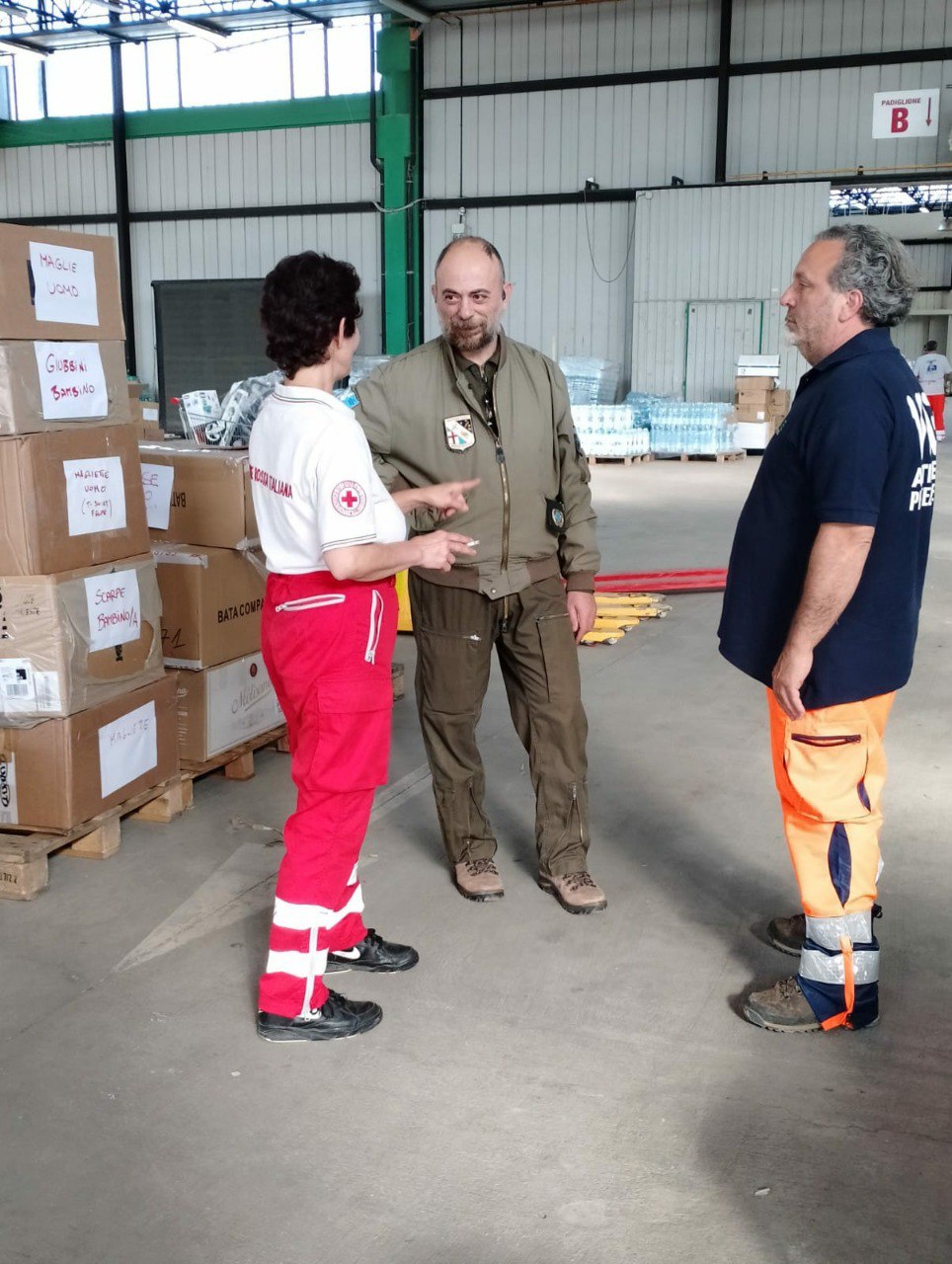
CNU DisasterTeam
Where a situation requires an operational humanitarian response, the CNU International Humanitarian Intervention Corps – DisasterTeam may be activated according to the CNU Statute and applicable procedures.
Its activities may include:
- emergency humanitarian assistance;
- logistics;
- first-response support;
- medical and health assistance through qualified personnel;
- distribution of essential supplies;
- support to affected communities;
- evacuation and rescue support;
- post-emergency humanitarian assistance.
The DisasterTeam works in coordination with the competent CNU structures and, where operations take place within a State, in cooperation with the relevant public authorities and authorized humanitarian partners.
It does not constitute a substitute for national emergency services, civil protection, police, armed forces or other public-response structures.
Special and High-Risk Operations
Certain humanitarian circumstances may require specialized capabilities and enhanced security procedures.
The CNU may therefore organize or participate in special humanitarian missions when necessary to protect life, dignity or fundamental rights.
These may involve combined expertise from:
- the CNU Prosecutor’s Department;
- CIUS;
- DisasterTeam;
- Human Rights structures;
- health professionals;
- CNU territorial Missions;
- external specialists;
- competent governmental authorities.
High-risk missions require specific authorization, assessment, operational planning, security protocols and clearly defined responsibilities.
No CNU member may independently undertake a high-risk operation merely by virtue of membership, title or HRD accreditation.
Emergency and Institutional Coordination
Complex situations may require coordination among several CNU structures.
The relevant bodies may therefore establish a joint response framework combining:
human-rights assessment → legal analysis → humanitarian protection → institutional liaison → operational planning → governmental coordination → authorized field action → documentation and follow-up.
This approach seeks to ensure that humanitarian urgency does not result in improvisation or unclear responsibility.
Confidentiality and Protection of Sources
Requests for assistance may involve highly sensitive information.
The CNU therefore seeks to protect:
- victims;
- witnesses;
- family members;
- whistleblowers;
- Human Rights Defenders;
- confidential sources;
- persons at risk.
Information is shared only when necessary and according to applicable data-protection, confidentiality and security requirements.
Particular care is taken where disclosure could expose a person to retaliation, violence or further harm.
What the CNU Does Not Claim
The CNU does not claim:
- autonomous police authority;
- criminal jurisdiction over States or individuals;
- military authority;
- automatic access to restricted territories;
- automatic diplomatic immunity;
- authority to override national Governments;
- unrestricted power to detain, search, seize or use force.
Where these powers are legally required for an operation, they remain with the competent public authorities.
The strength of the CNU model lies instead in combining humanitarian capacity with institutional cooperation.
Our Operational Principle
The distinction is fundamental:
CNU may act operationally.
CNU does not claim to act above the law.
When circumstances require investigation, rescue, evacuation or humanitarian extraction, the Confederation can contribute personnel, information, expertise, logistical capabilities and international coordination.
Where governmental authority is required, the CNU works with the Government and competent institutions.
This model allows humanitarian action to remain both effective and legitimate.
From Report to Protection
A CNU protection case may therefore follow a structured pathway:
REPORT
↓
DOCUMENTATION AND PRELIMINARY ASSESSMENT
↓
LEGAL / HUMANITARIAN ANALYSIS
↓
ACTIVATION OF THE COMPETENT CNU STRUCTURES
↓
CONTACT WITH COMPETENT AUTHORITIES OR PARTNERS
↓
JOINT OR AUTHORIZED PROTECTION / INVESTIGATION / RESCUE ACTION
↓
FOLLOW-UP, DOCUMENTATION AND PROTECTION
Not every case requires every stage.
The response is proportionate to the nature and seriousness of the situation.
Our Commitment
Humanitarian protection requires more than declarations.
Sometimes it requires documentation.
Sometimes legal support.
Sometimes institutional dialogue.
And in exceptional circumstances, it requires people prepared to act on the ground alongside the authorities and organizations competent to intervene.
The Confederation of Humanitarian Nations seeks to bring these capacities together within one coordinated humanitarian framework.
To observe when observation is needed.
To document when truth must be preserved.
To speak when rights require a voice.
To cooperate when institutions must act together.
And, when life is in danger and the lawful conditions exist, to help turn protection into action.